
A Dallas detailing shop appears on page one for an article about ceramic coating, yet drivers searching “detailing near me” cannot find its listing. Meanwhile, another shop dominates Google Maps but receives little traffic to its website. Both businesses have different search visibility problems, but they need different fixes.
A google maps seo service focuses on helping nearby customers discover and contact a business through local listings. Traditional SEO improves how website pages appear in organic search results. For automotive shops, the strongest approach usually connects both.
What Google Maps SEO Actually Covers
Google Maps optimization centers on your Google Business Profile, the listing showing your location, hours, reviews, photographs, and contact options. It also influences appearances in Google's local search results.
Google identifies relevance, distance, and prominence as the main local ranking factors. Relevance measures whether your profile matches a query. Distance reflects proximity to the searcher. Prominence considers how well known your business appears, including reviews and references elsewhere online.
A shop cannot control every searcher's location. It can improve profile accuracy, select accurate and honest business categories, describe actual services, and encourage genuine customer feedback.
For a window tinting business, these steps help people assess whether the shop offers the service they need nearby.
How Traditional SEO Works Differently
Traditional SEO focuses primarily on website content and technical accessibility. Search engines must discover pages, understand their topics, and determine whether they provide useful answers to particular searches.
A car detailing company might publish individual pages covering interior detailing, paint correction, and ceramic coating. Helpful pages explain the work, expected outcomes, pricing factors, and when customers should book.
Technical fundamentals also matter: pages should work on mobile devices, load reliably, use descriptive headings, and provide links visitors can follow. Google Search Console helps identify indexing and search performance issues.
Unlike a Maps listing, a helpful guide may reach readers outside your immediate neighborhood. That wider reach is useful for research, although visitors from distant cities may never become local customers.
Where the Two Strategies Overlap
These services are different, but they support each other. A complete Business Profile sends potential customers to your website. A strong, well-organized website explains services in depth and gives those visitors reasons to call.
Google also says prominence can reflect information from websites linking to a business. That is one reason legitimate local recognition matters beyond your profile.
Keep your shop's contact details consistent wherever customers encounter them. Include authentic photos of completed work, accurate service descriptions, and a straightforward appointment process.
Do not create dozens of nearly identical city pages or add keywords to your official business name. Neither practice replaces a useful customer experience, and misleading profile names can violate Google's rules.
Which Should Your Auto Shop Prioritize?
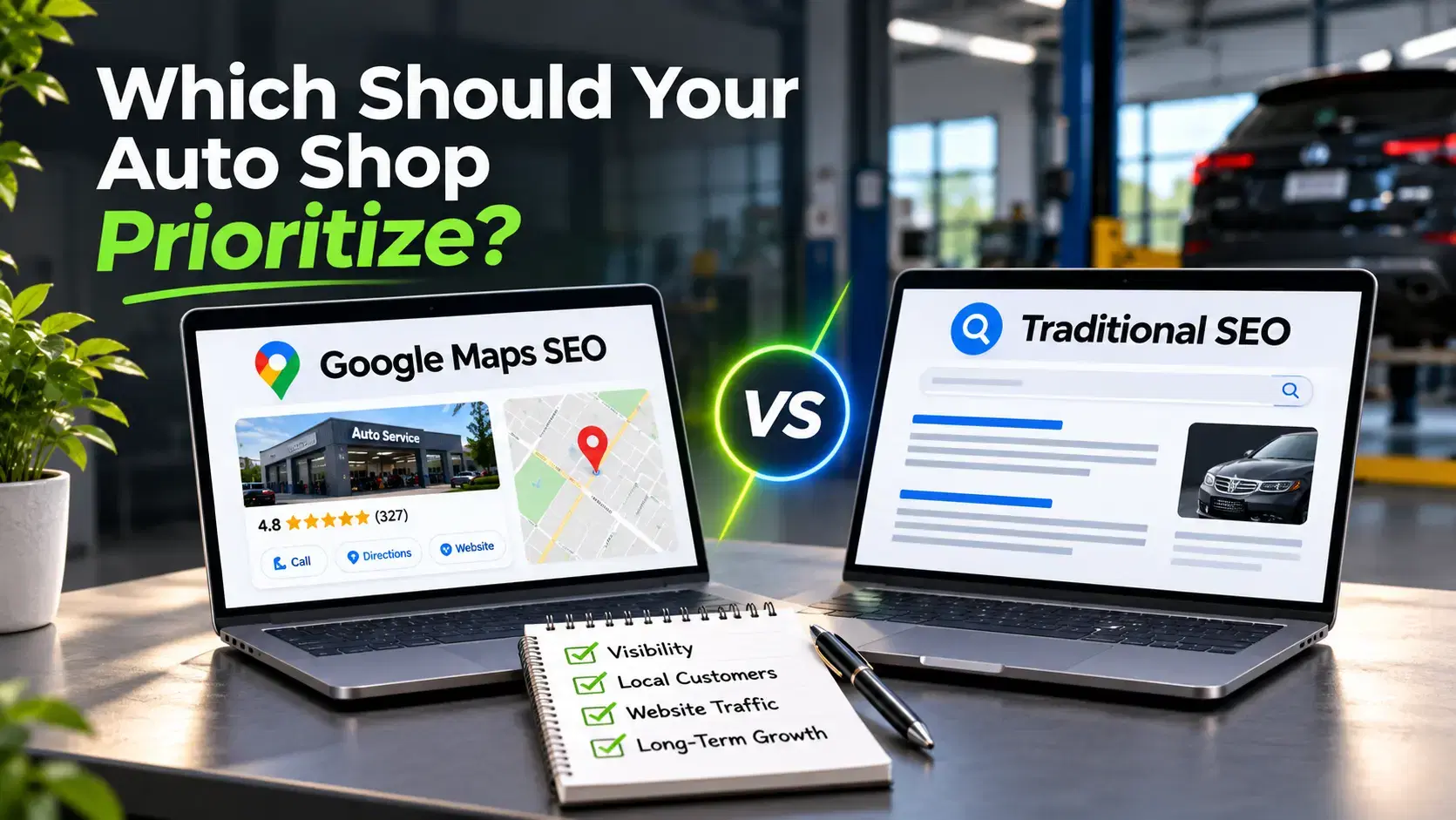
Start with the searches most likely to produce appointments. A driver who needs a windshield repair today may rely heavily on nearby Maps results. Someone comparing ceramic coating packages may read several websites before requesting estimates.
If your Business Profile contains incorrect hours, weak categories, or an outdated phone number, fix those problems first. If your Maps listing gets attention but nobody books, examine the destination page and how quickly your team responds.
A newer shop with limited resources can begin with one accurate profile and a few useful service pages. Expand carefully as actual inquiries reveal the most valuable services and neighborhoods.
Avoid agencies promising a permanent number one position. Google explicitly says businesses cannot request or pay for better local ranking, and organic results are never guaranteed.
Measure Results That Matter to Revenue
For Maps, review Business Profile interactions, including calls, website clicks, and direction requests where available. For traditional SEO, evaluate organic landing pages, relevant queries, and inquiry conversions.
Neither dashboard tells the entire sales story. Connect incoming requests to estimates, appointments, completed jobs, and revenue. A hundred website visits from outside your service area may be less valuable than ten nearby calls that become bookings.
Assess meaningful trends over several months rather than relying on one ranking screenshot. Location changes Maps results, while organic rankings vary by query, device, and competition.
Frequently Asked Questions
Is Google Maps SEO the same as local SEO?
Not exactly. Maps optimization is a major part of local SEO, which can also include location-focused website pages, local references, and consistent business information across the web.
Can traditional SEO improve Google Maps rankings?
It can support local visibility indirectly through useful business information and recognition. However, a strong organic ranking does not guarantee a top Maps position.
How long does Google Maps SEO take?
Some corrections appear quickly, but competitive visibility can take months. Timing depends on your starting point, nearby competitors, and ongoing business activity.
Should automotive businesses pay for both services?
Not always as separate packages. Ask what work each proposal includes, which problems it addresses, and how results will connect to booked jobs.
Build Around the Customer's Next Step
Search your services from a customer's perspective. Can they find the shop, understand its work, trust the evidence, and book without confusion? Fix whichever step breaks first.
Auto Lead Experts helps automotive businesses combine Maps visibility, useful websites, and lead follow-up. The goal is not two competing SEO campaigns. It is one clearer path from local search to a paying customer.