
A driver asks an AI search tool, “Which paint protection option makes sense for my highway commute?” Another asks why a car shakes when braking. Instead of showing only a list of links, the tool may explain possible answers and point toward supporting sources.
For automotive businesses, this changes how customers discover services. AI search optimization helps make useful business information understandable, accessible, and credible when search systems assemble answers. It is not a shortcut to guaranteed recommendations. It starts with accurate information that genuinely helps drivers decide.
What Is AI Search Optimization?
AI search optimization is the practice of improving content and business information for discovery through AI-assisted search experiences.
These experiences can summarize webpages, compare options, answer detailed questions, and link to relevant sources. A traditional search might return pages for “ceramic tint Dallas.” An AI-assisted search might address whether lighter ceramic film can offer heat rejection without sacrificing night visibility.
The business opportunity is to answer that deeper question accurately, then make the next step clear for customers who want professional help.
How AI Search Finds Information
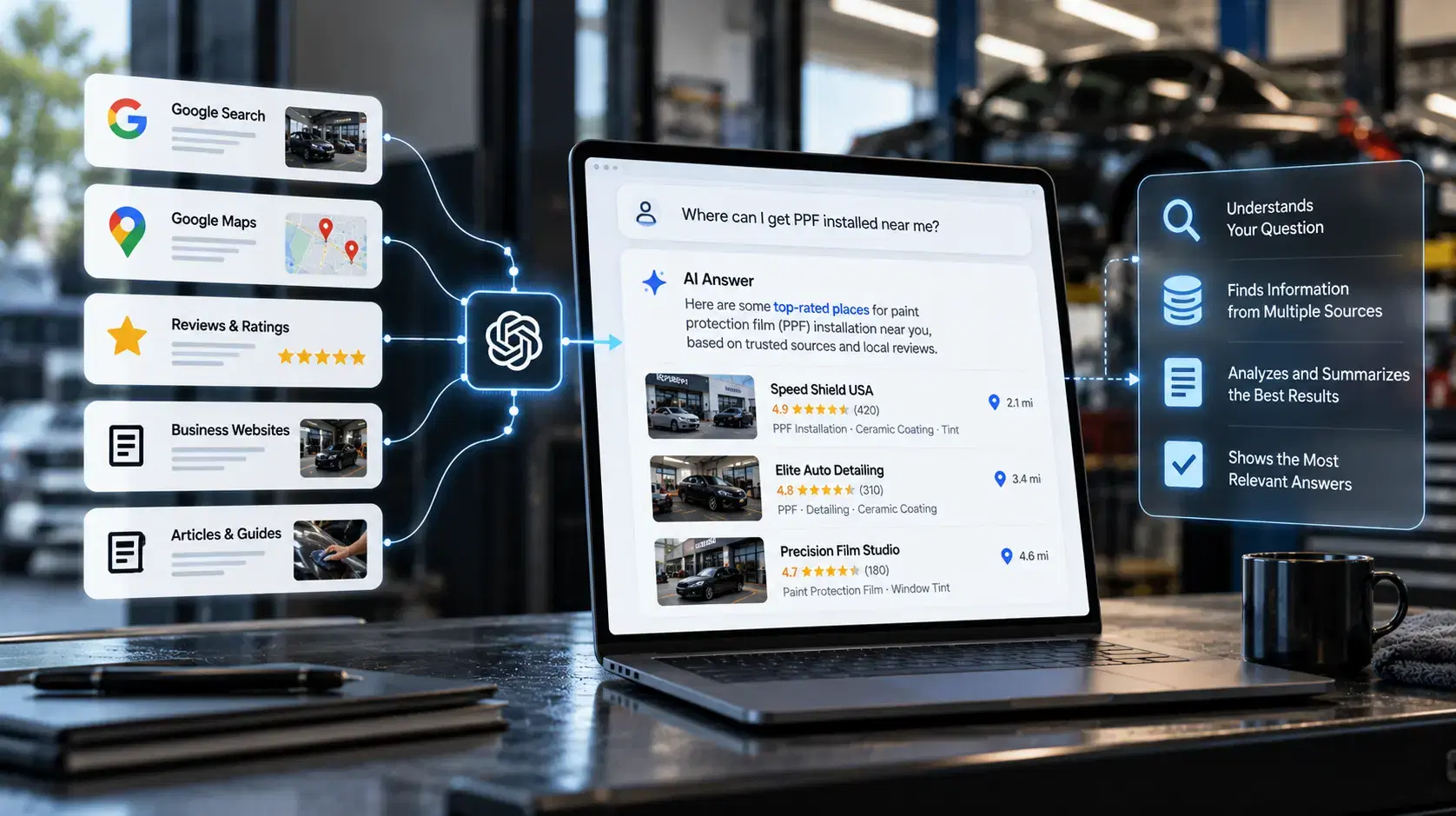
AI search systems differ, but some retrieve webpages and other available information to support their responses. Google says its AI Overviews and AI Mode build on existing Search systems and can show links to supporting websites.
That means foundational SEO still matters. Pages should be crawlable, indexed when appropriate, readable, and useful. Search engines need to understand what the business offers, while visitors need evidence that the information is dependable.
No agency can guarantee that a particular business will appear in a generated answer. Results can vary with the question, location, available sources, and the system used.
Answer Questions Specific to Automotive Services
Generic claims like “we deliver the best quality” give customers little guidance.
A repair shop can explain what different brake noises might indicate and when driving may be unsafe. A detailer can clarify when interior extraction is appropriate. A tint installer can compare heat rejection with visible light transmission. A PPF specialist can explain which panels face frequent rock impacts.
These answers help AI systems and human readers understand the business's expertise. Keep advice within the shop's actual services, and distinguish general education from a diagnosis or firm quote. A strong answer also explains when a customer should seek an in-person assessment.
Show Evidence Beyond Marketing Claims
Useful content becomes stronger when it includes authentic experience.
Describe a typical inspection process, explain what a service package includes, show original installation photographs, and identify film or equipment brands accurately. Publish realistic limitations alongside benefits: ceramic coating does not stop rock chips, and paint protection film cannot prevent every impact.
Avoid invented case studies, copied reviews, and unsupported performance numbers. Specific explanations help readers decide whether the business understands their problem, even when an AI response does not send an immediate website visit.
Keep Local Business Facts Consistent
Automotive services depend on geography. Customers need to know where a shop operates, which vehicles it accepts, what services it performs, and how appointments work.
Keep the website, contact details, hours, and Google Business Profile accurate. Clearly describe actual locations and service coverage rather than creating thin pages for places the business does not serve.
For example, a Dallas detailing shop should make its location and booking process obvious. Accurate local details support customer confidence whether discovery begins with Maps, traditional Search, or an AI-generated answer.
Organize Content for Real Decisions
Write pages around decisions rather than keyword repetition. A useful tint guide could explain film types, legal limits, nighttime visibility, care instructions, and questions to ask an installer.
Use descriptive headings, concise explanations, and relevant internal links. Keep important facts in visible text instead of hiding them inside graphics. Structured data can describe eligible content when it accurately matches the page, but Google does not require special AI-only schema to appear in its AI features.
Good organization helps people first; any machine understanding is a benefit, not the sole purpose.
Measure More Than AI Mentions
Check whether the strategy helps the business attract qualified inquiries. Review organic search performance, service-page engagement, calls, forms, and confirmed bookings. Separate organic leads from paid advertising results.
Google Search Console provides reporting related to generative AI features, but attribution and visibility differ across search platforms. Manual prompt checks can suggest what answers look like, not prove stable rankings.
Record the actual question, location, date, and platform when reviewing mentions. Focus on whether useful customer actions follow, rather than celebrating an isolated appearance.
FAQ: AI Search Optimization
Does AI search optimization replace SEO?
No. Technical accessibility, helpful content, and reliable business information remain fundamental.
Can AI tools recommend my auto shop?
They may mention businesses or link to sources, but no placement is guaranteed.
Should every shop publish AI-written articles?
No. Original expertise, factual review, and customer usefulness matter more than publishing volume.
What should an automotive business improve first?
Correct service information, answer genuine customer questions, document real work, and make contact options clear.
Build Visibility Through Useful Answers
AI search optimization works best when an automotive business becomes a dependable source, not merely another website repeating familiar keywords.
Auto Lead Experts helps repair shops, detailers, tint installers, and PPF businesses strengthen organic search visibility through clear content, accurate local information, technical SEO, and conversion-focused websites built around real customer questions.