
Your repair shop needs more brake jobs this month. A nearby detailing studio wants steady bookings throughout the year. Both owners want customers from Google, but the best way to attract them may be different.
An automotive SEO service helps a shop improve visibility in unpaid search results. Google Ads buys opportunities to appear in sponsored placements. Neither guarantees appointments, and neither fixes a weak booking process. The right choice depends on timing, budget, competition, and how customers choose your services.
How Automotive SEO Works
SEO improves the information and experience that help search engines understand a business. Work may include fixing website problems, developing useful service pages, improving Google Business Profile details, and earning relevant local recognition.
For an auto repair shop, this could mean explaining brake inspections, diagnostic appointments, and the neighborhoods served. For a tint installer, it might mean answering questions about film options and local rules.
SEO does not charge the shop for each organic click, but professional work requires time and money. Rankings can change, and results are never guaranteed.
How Google Ads Works
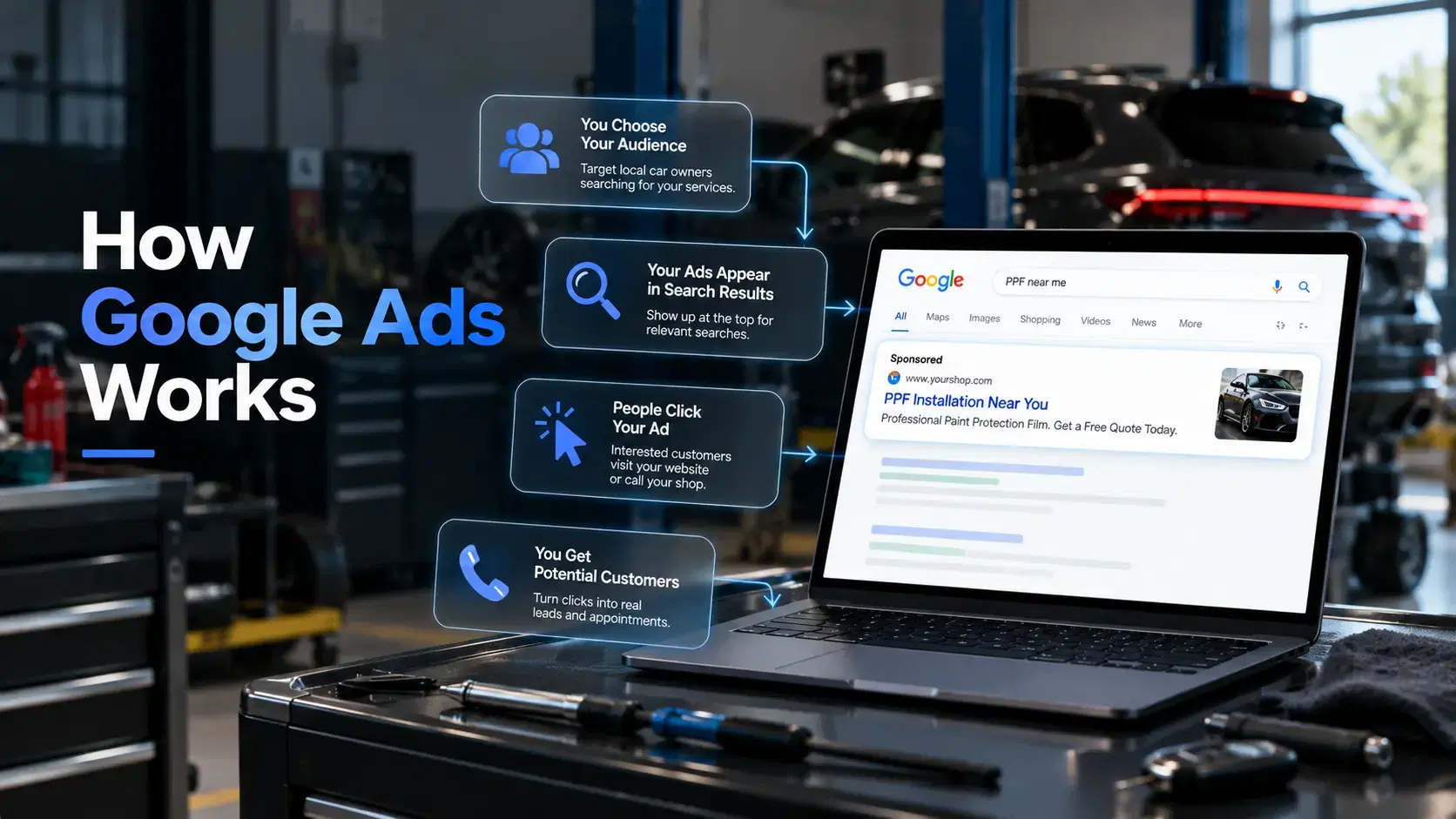
Google Ads lets businesses compete for sponsored visibility when people search relevant terms. Advertisers choose targeting, budgets, and campaign goals. Search ads enter auctions where bids, ad relevance, landing pages, and other factors influence delivery.
A shop might advertise tire replacement during a seasonal rush or promote a ceramic coating package with open appointment slots.
Many Search campaigns use payment models based on clicks, although bidding options differ. Spending creates exposure opportunities, not automatic customers. Irrelevant searches, poor landing pages, and unanswered calls can waste advertising money.
Speed: Which Gets Results Faster?
Ads can become eligible to show relatively quickly after approval and setup. That makes them useful when a new shop needs visibility or an established business has immediate capacity to fill.
SEO usually develops more gradually. Search engines must discover changes, evaluate pages, and consider competitors. Some improvements may show earlier than others, but nobody can promise a fixed timeline.
Speed also has a cost. If paid campaigns stop, their sponsored exposure generally stops. Useful SEO content may continue attracting visitors without a fee for every organic click, though maintaining performance still requires attention.
Budget: Compare Total Cost, Not Click Price
An automotive SEO service may involve monthly fees or project costs for research, content, technical work, and local improvements. Google Ads typically combines advertising spend with any campaign management expense.
Comparing the two only by cost per lead can hide important details. A cheap inquiry from outside your service area might be worthless. An expensive click that becomes a profitable booking might be acceptable.
Track qualified inquiries, confirmed appointments, completed jobs, and approximate gross profit. Evaluate each channel over a suitable period rather than judging success from a few days of data.
Match the Channel to the Automotive Service
Urgent repair searches often signal immediate intent. Search ads may help a shop compete for these customers while SEO builds visibility for repairs and recurring maintenance.
PPF and ceramic coating customers may spend longer comparing protection levels, installers, and pricing. Helpful organic guides can support that research. Ads can still capture people ready to request a quote.
A new detailing studio with an empty calendar may prioritize a tightly controlled advertising test. An established specialist with steady demand might invest more heavily in organic visibility.
These are starting points, not universal rules. Local competition and margins change the calculation. Staff capacity can change priorities quickly.
When Using Both Makes Sense
SEO and Google Ads can support different stages of the same buying decision.
An owner might run ads for services with available appointments while building detailed organic pages for core offerings. Questions heard during calls can inform both website content and ad messaging.
Keep measurement separate. Label paid and organic inquiries accurately, and do not assume Google Ads improves unpaid rankings. Google states that advertising does not influence organic Search placement.
If budgets are limited, start with one clear priority, measure it, and expand only after the process works.
Avoid the Mistakes That Hurt Both Channels
Before spending more, check whether the shop answers calls, follows up with quote requests, and offers clear booking options.
Make sure advertised services match what staff can deliver. Send visitors to relevant pages rather than forcing every search into the homepage. Show authentic photographs and explain important pricing variables without making unsupported promises.
A missed call remains a missed opportunity whether it came from an ad or an organic result.
FAQ: Automotive SEO and Google Ads
Is SEO free compared with Google Ads?
Organic clicks have no advertising charge, but creating and maintaining effective SEO requires resources.
Can Google Ads guarantee first position?
No. Ad auctions determine eligibility and placement, and position varies across searches.
Will paying for ads improve local Maps rankings?
No. Paid placements do not purchase better organic local rankings.
Which should a new auto shop start with?
Consider immediate booking needs, available budget, service margins, and whether the website can convert inquiries.
Choose Based on Bookings, Not Buzzwords
SEO builds a foundation for unpaid discovery, while Google Ads offers controllable paid exposure. Both require useful pages, accurate service information, and reliable follow up.
Auto Lead Experts helps automotive businesses evaluate search visibility, website conversions, and qualified leads so marketing decisions reflect real shop capacity and measurable customer demand.