
Automotive businesses do not all sell the same thing, so their SEO should not look the same.
A repair shop needs drivers with active vehicle problems. A detailer needs customers who care about cleanliness and maintenance. A tint shop needs people searching for comfort, privacy, and heat reduction. A PPF brand needs buyers who want to protect paint before damage happens.
SEO automotive strategy works when it matches each business model, customer intent, and service value. The goal is not only ranking higher. The goal is attracting the right visitors and turning them into calls, quote requests, bookings, and repeat customers.
SEO for Repair Shops
Repair shop SEO should focus on problems and urgency.
Drivers often search when something feels wrong. They may type brake noise, check engine light, car AC blowing warm air, battery keeps dying, oil leak, or tire vibration. These searches are different from casual browsing because the customer may need help soon.
Repair shops need service pages that explain symptoms, possible causes, inspection process, safety concerns, and booking steps. Content should make drivers feel understood, not confused.
Reviews, clear phone buttons, and fast mobile pages matter because repair customers often compare shops quickly.
SEO for Detailers
Detailing SEO is more about appearance, maintenance, and trust.
Customers may search for interior detailing, full detail, paint correction, odor removal, ceramic coating prep, or auto detailing near me. They want proof that the shop can make the vehicle look and feel better.
Detailers should use strong service pages, before-and-after photos, package explanations, and content about maintenance schedules, stain removal, paint care, and interior protection.
The website should help customers understand the difference between a basic wash and professional detailing. That education can justify value and reduce price-only comparisons.
SEO for Tint Shops
Tint shop SEO should focus on comfort, legality, and performance.
Customers search for window tint, ceramic tint, heat reduction, privacy, legal tint limits, UV protection, and tint percentages. Many people do not know the difference between dyed, carbon, and ceramic film.
A tint shop should build content around those questions. Service pages should explain film types, shade options, legal limits, curing time, warranty, heat rejection, and visibility.
This helps customers choose better film instead of only asking for the darkest or cheapest option.
Good tint SEO turns confusion into confidence.
SEO for PPF Brands
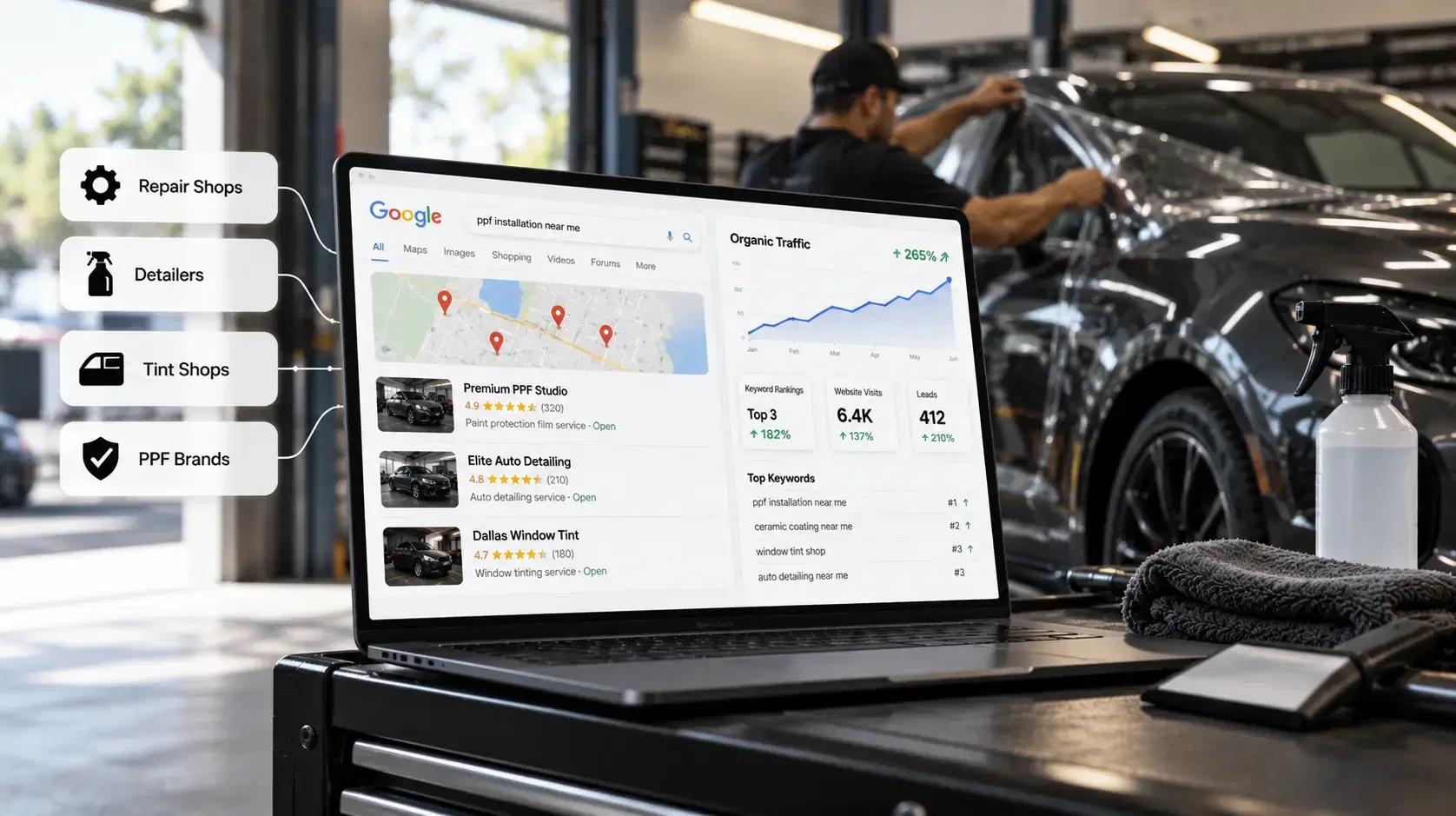
Paint protection film SEO should focus on prevention.
Customers often search after buying a new car, Tesla, truck, luxury vehicle, or sports car. They want to know whether PPF is worth it, which areas need coverage, how much it costs, and how it compares with ceramic coating.
PPF brands need pages for full front coverage, track packages, full body PPF, Tesla PPF, door cups, rocker panels, headlights, and high-impact areas.
Educational content should explain rock chips, road rash, bug stains, self-healing film, maintenance, and long-term paint preservation.
Why One SEO Strategy Does Not Fit All
A repair shop and a PPF installer may both be automotive businesses, but their customers think differently.
Repair customers usually want a solution to a problem. Detailing customers want improvement. Tint customers want comfort and privacy. PPF customers want prevention and long-term protection.
That means keyword research, page structure, content, images, calls to action, and follow-up should match the service type.
Generic automotive SEO often fails because it treats all auto businesses the same.
Local Search Still Matters
Most automotive services are local.
Customers want a nearby shop they can trust. Google Business Profile, reviews, photos, hours, service categories, and location consistency all support local visibility.
However, local SEO should still match the niche. A repair shop profile should highlight diagnostic and repair services. A detailer should show finished interiors and polished paint. A tint shop should show film results. A PPF shop should show clean edges and protected panels.
Local proof helps searchers choose.
Content Should Support Real Decisions
The best SEO content answers questions customers actually ask before booking.
Repair shops can explain warning signs. Detailers can explain service levels. Tint shops can explain shade choices. PPF brands can explain coverage packages.
This content should connect to service pages through internal links. It should guide the reader toward the next step without sounding forced.
Good content brings search traffic, builds trust, and improves conversion.
FAQ: SEO Automotive
Is SEO automotive only for dealerships?
No. Repair shops, detailers, tint shops, PPF brands, wrap shops, tire shops, and service businesses can use SEO.
What pages should auto businesses create first?
Start with core service pages, location pages, FAQ sections, and helpful blog content.
How long does automotive SEO take?
It depends on competition, website quality, reviews, content depth, technical health, and local signals.
Can SEO bring better leads?
Yes, when the strategy targets real service intent and makes booking easy.
Build SEO Around the Exact Auto Niche
SEO automotive works best when it is built around the specific business, not a generic industry label.
Repair shops need problem-based SEO. Detailers need appearance and care content. Tint shops need comfort and legal education. PPF brands need prevention and protection messaging.
Auto Lead Experts helps automotive businesses build SEO, local SEO, AI search visibility, content, service pages, and website conversion strategies that match real customer intent and support qualified lead growth. That clarity helps owners invest in pages, topics, and offers that fit their customers and daily operations better.