
A detailing shop gets thirty inquiries in one week. Twenty ask for the cheapest possible price, six live outside its service area, and only four book appointments. The problem is not a lack of attention. It is a lack of qualified leads.
Effective automotive lead generation connects your shop with drivers who need your services, can afford them, and are ready to take the next step. That requires more than collecting phone numbers. It means attracting the right searches, explaining your value, and making it easy to book.
Start by Defining a Qualified Lead
A qualified lead is not simply someone who fills out a form. For a paint protection film installer, it might be a local vehicle owner who understands the service, has a suitable budget, and wants an appointment within two weeks.
Define what matters for your business: location, requested service, vehicle details, timing, and estimated project value. A windshield repair inquiry and a full vehicle wrap inquiry require different follow-up conversations.
Track booked jobs and revenue by lead source, not just inquiry totals. Fifty low-intent messages can be worth less than five serious estimates.
Capture Buyers Through Local Search
Customers often search when they have a specific problem: “ceramic coating near me,” “window tinting in Dallas,” or “headlight restoration cost.” Your website should answer those searches with dedicated, useful service pages.
Each page needs clear descriptions, original project photos, service-area information, and a visible way to request an estimate. Explain what affects pricing without promising a universal figure for every vehicle.
Keep your Google Business Profile accurate. Select relevant categories, update business hours, add genuine work photos, and respond thoughtfully to reviews. Consistent contact information across your website and listings helps customers reach the correct shop.
Local visibility matters, but ranking alone does not guarantee bookings. A searcher still needs enough information to trust the business.
Build Pages That Convert Interest Into Appointments
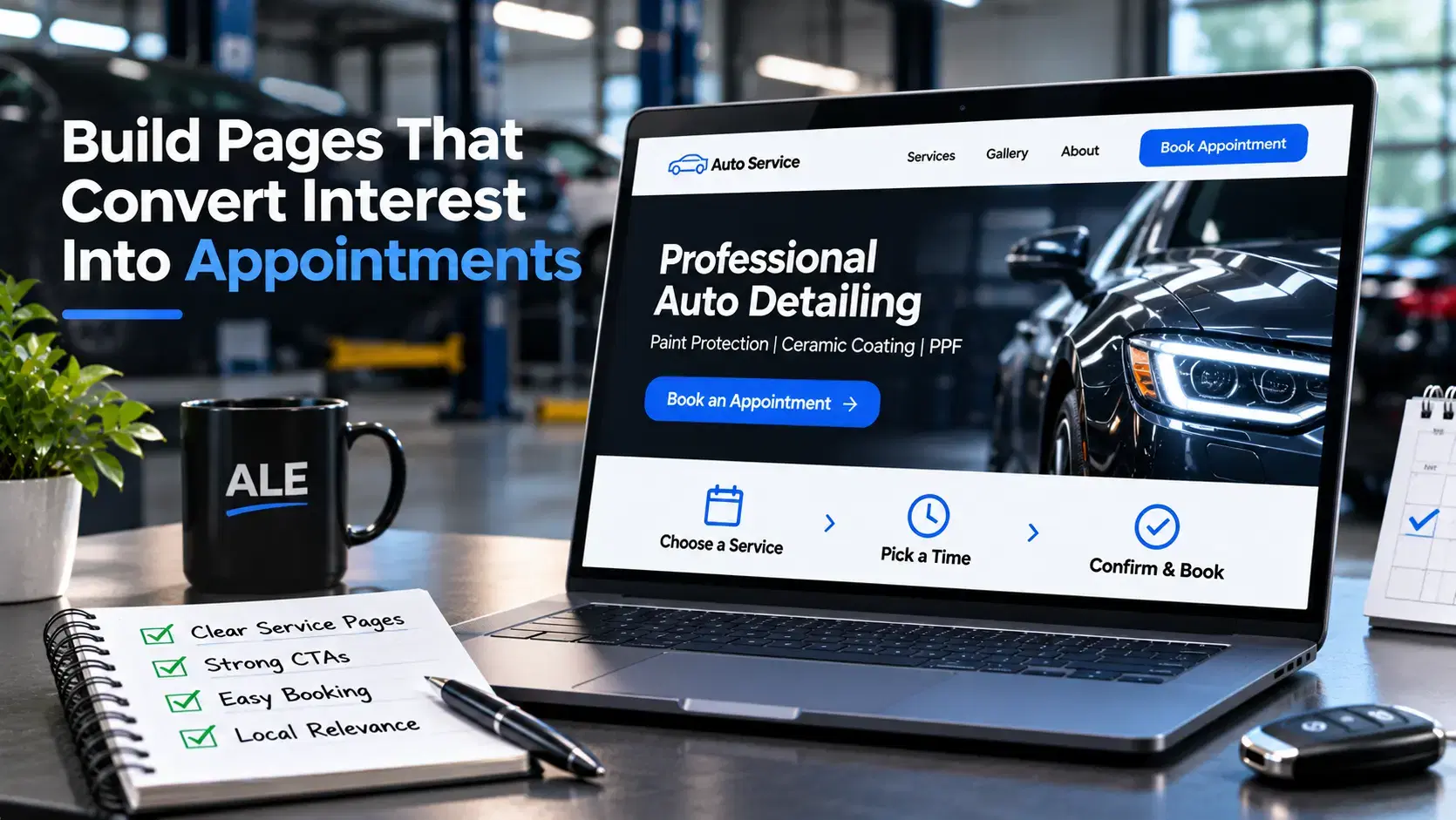
Imagine landing on a wrap shop website and finding only a dramatic car photo and a “Contact Us” button. You still do not know which wraps the shop installs, how consultations work, or whether it serves your city.
Good service pages answer practical buying questions. Show real examples, explain material options, describe preparation and installation, and address common maintenance concerns.
Use a short inquiry form that asks for the service, vehicle make and model, preferred timing, and contact details. Avoid requesting information your team will never use.
Put the phone number and booking option where mobile visitors can find them immediately. Check that forms work, calls connect, and confirmation messages explain what happens next.
Use Paid Ads With Clear Intent
Google Search ads can reach drivers actively looking for a service. Separate campaigns for ceramic coating, paint protection film, and vehicle wraps so the message matches each customer's intent.
Send clicks to relevant service pages rather than a generic homepage. Review actual search terms and exclude irrelevant queries. Geographic targeting should reflect where customers realistically travel from, not the largest possible radius.
Social ads work differently. Before-and-after photos, installation videos, and customer stories can create interest among people who were not already searching. They may need more education before requesting a quote.
Judge both channels by qualified appointments and completed jobs. Cost per lead alone can reward campaigns that generate cheap but unsuitable inquiries.
Follow Up Before Interest Fades
A driver requesting three tint quotes may choose the first shop that responds clearly. Set a realistic response target during business hours and assign someone responsibility for every inquiry.
Reply with the information the customer actually needs: service availability, useful pricing context, the next step, and any details required for an accurate estimate. Automated acknowledgments can confirm receipt, but they should not replace a helpful conversation.
Track leads through stages such as new inquiry, contacted, estimate sent, booked, and completed. Review where prospects disappear. If many request quotes but few schedule, investigate pricing explanations, appointment availability, and follow-up quality.
Ask satisfied customers for honest reviews after completed work. Their experiences can help future buyers evaluate your shop.
Frequently Asked Questions
What is automotive lead generation?
It is the process of attracting potential automotive customers and turning their interest into inquiries, appointments, and sales. Effective campaigns focus on customers whose needs fit the services you provide.
Which channel generates the best automotive leads?
It depends on the service and market. Local search often captures existing demand, while social media can introduce visual services to new customers. Measure booked revenue before deciding.
How can I improve lead quality?
Make service pages specific, show realistic work examples, target the right locations, and ask a few useful qualifying questions. Track which inquiries become paying customers.
How quickly should a shop respond?
As quickly as staff can respond accurately during stated business hours. A clear, useful answer generally beats an instant message that ignores the customer's question.
Turn More Inquiries Into Real Work
Choose one service with healthy margins and examine its entire customer journey, from search result to completed appointment. Fix the biggest leak first, whether that is an unclear page, irrelevant advertising, or unanswered inquiries.
Auto Lead Experts helps automotive businesses improve visibility, strengthen their websites, and attract better-fit inquiries. Start by understanding exactly which leads actually become profitable jobs over time in your local market.