
A striking color change can stop someone scrolling, but admiration does not always turn into a wrap appointment. Some viewers want a full transformation, others need a few accents, and business owners may be searching for branded fleet graphics.
Effective car wrap advertising recognizes those different buyers. Instead of promoting every project with the same message, wrap shops can match real examples, search intent, and clear quotes to customers ready to discuss installation.
Separate Personal Wraps From Commercial Graphics
Personal vehicle owners often care about color, finish, originality, and how the wrap complements their car. Commercial buyers focus on logo visibility, coverage, consistent branding, downtime, and multiple vehicles.
Build distinct campaigns for these audiences. A sports car owner exploring satin finishes needs different photographs and information from a plumbing company comparing graphics for six vans. Mixing both audiences into one generic advertisement can weaken the message and attract unsuitable inquiries.
Show Transformations Customers Can Evaluate
Use original photographs of completed projects, showing vehicles from several angles. Include close views of challenging edges, mirrors, bumpers, and seams so potential customers can evaluate workmanship.
Short videos can follow the transformation from paint inspection through preparation and installation to the finished result. Identify the film finish and coverage clearly. Avoid heavily edited images that misrepresent colors, especially metallic or color shifting films that look different under changing light.
Get permission before publishing customer vehicles.
Capture High Intent Wrap Searches
Google Search ads can reach buyers already looking for installation. Organize keywords around distinct services, such as full color change, partial wraps, roof wraps, and commercial van graphics.
A search for “car wrap installation near me” suggests different intent from “how to wrap my car.” Review actual search terms and consider negative keywords for DIY vinyl rolls, wholesale supplies, or employment queries when those are not services you offer.
Target areas customers can realistically travel from. Match each advertisement to a relevant page rather than sending all traffic to the homepage.
Turn Your Portfolio Into a Local Showroom
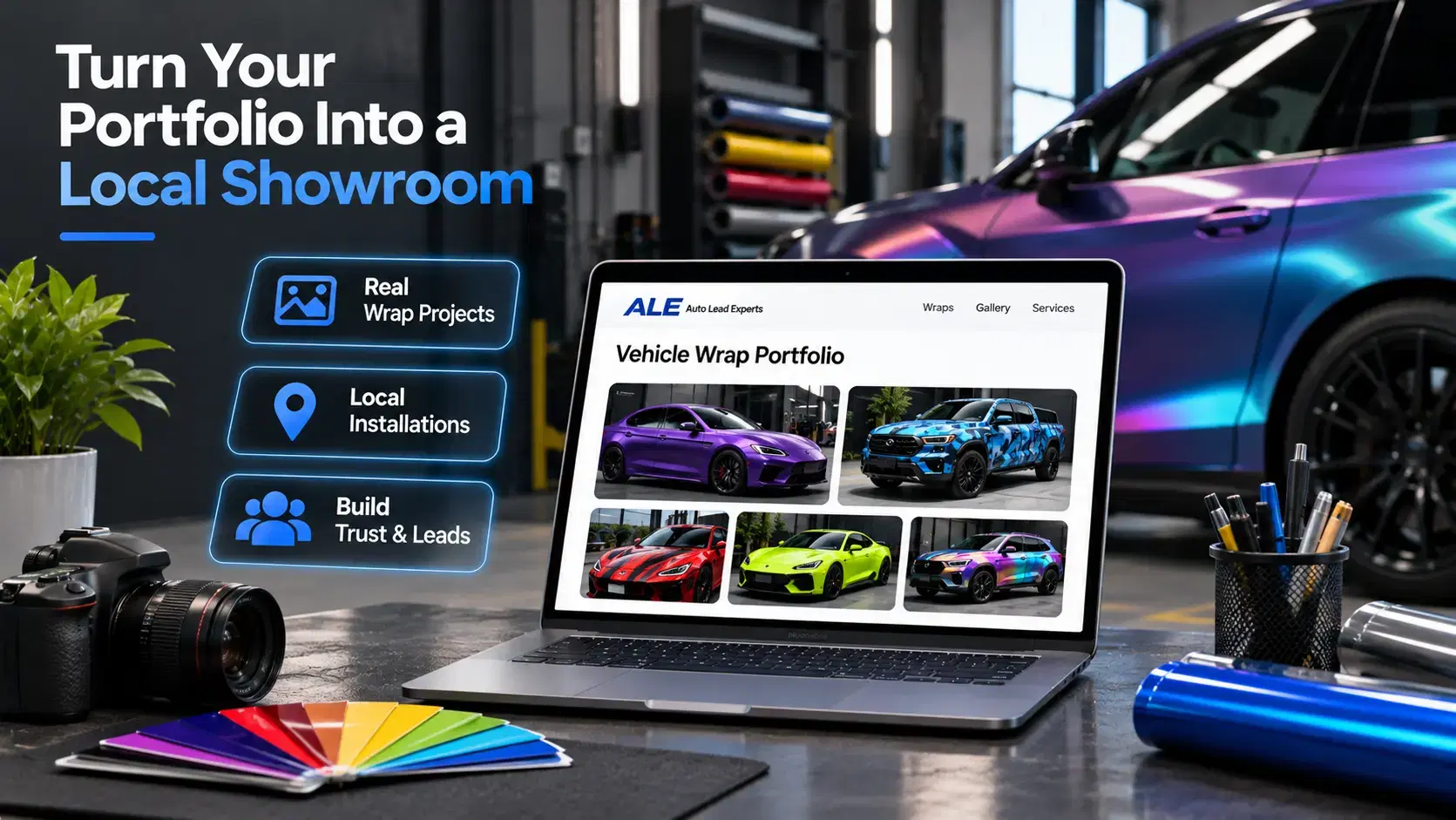
Your website and Google Business Profile should show the quality and variety of your work. Organize examples by coverage and finish so visitors can easily find projects resembling their vehicles.
Keep business hours, contact details, and location accurate. Invite genuine customer reviews and respond professionally. Google bases local visibility on relevance, distance, and prominence, not advertising.
A useful portfolio answers questions a promotional slogan cannot: What does a partial wrap look like, and how cleanly are difficult panels finished?
Use Social Media to Inspire Specific Projects
Social advertising can introduce colors and designs to people who have not searched for a wrap yet. Test short clips comparing gloss and satin, demonstrating roof accents, or showing a branded work vehicle arriving at a jobsite.
Use specific captions that explain the project and invite a quote for similar coverage. Show the shop's own work rather than borrowing images that prospective customers might mistake for completed installations.
Judge creative by relevant messages and scheduled consultations, not views alone.
Give Fleet Buyers a Separate Buying Path
A business requesting five branded vans needs more than a gallery of luxury color changes. Explain design approval, print proofs, vehicle dimensions, partial versus full coverage, scheduling, and replacement graphics.
Offer a fleet inquiry form covering vehicle count, models, and installation dates. Local partnerships with sign companies or commercial vehicle businesses may also introduce suitable projects.
Do not promise a precise advertising return from vehicle graphics without data. Fleet branding can support awareness, but results depend on routes, design, and business circumstances.
Make Quotes Clear Without Oversimplifying Prices
Wrap cost varies with vehicle size, film type, coverage, paint condition, design work, and installation complexity. Explain those factors before asking for a deposit.
A form can collect year, make, model, finish, and requested panels. Follow up with a consultation or inspection when necessary. Clarify whether removal of old film, door jamb coverage, or custom printing is included.
Honest quotes reduce mismatched expectations and help customers compare similar services.
Measure Installs Instead of Impressions
Track ad spend, qualified quote requests, consultations, deposits, completed wraps, and profit after materials and labor. Separate paid inquiries from organic search, social referrals, and repeat customers.
If a campaign generates many messages but few deposits, examine the targeting, portfolio, response time, and pricing explanations. Pause campaigns promoting services the shop cannot currently schedule.
Everything About Car Wrap Advertising
Are Google Ads useful for wrap shops?
Yes. They can reach active buyers, but location targeting, relevant pages, and prompt follow up affect results.
Which wrap photos work best in ads?
Original finished vehicles, consistent angles, and close details help customers assess style and workmanship.
Should personal and fleet wraps share campaigns?
Usually not. Their buyers, budgets, project requirements, and decision processes differ.
Can social media generate wrap bookings?
Yes. Visual demonstrations can inspire inquiries, although interest may develop before someone requests an appointment.
What should a wrap shop measure?
Qualified quotes, deposits, completed jobs, acquisition costs, and margins provide more value than engagement alone.
Advertise the Work You Want to Book
Strong wrap marketing shows craftsmanship, speaks to distinct buyers, and makes project requirements easy to discuss. Combine carefully targeted ads with helpful examples and a consistent quote process.
Auto Lead Experts helps automotive wrap businesses improve search visibility, create clearer service pages, and measure qualified inquiries so marketing supports sustainable bookings.