
Automotive shop advertising should be planned like a campaign system, not a collection of random posts.
A shop may run Google ads, promote offers, update Maps, share social proof, send emails, and publish content, but the results stay weak when every channel says something different. Better advertising gives each channel a clear job.
Google Maps can capture nearby demand. Search campaigns can reach people comparing services. Social ads can remind drivers about seasonal needs. Email can bring past customers back. The strategy works when each message supports a specific action and a specific business goal.
Define the Service You Want to Sell
Advertising becomes sharper when the shop knows what it wants to fill.
A slow week may need maintenance appointments. A hot month may need AC checks, window tint, detailing, or ceramic coating promotions. A protection shop may want more PPF consultations. A tire shop may want alignment and rotation bundles.
Do not advertise everything equally. Pick the services that have capacity, margin, and clear demand.
This keeps the budget focused and makes the campaign easier to measure.
Build Offers That Make Sense
An offer does not always need to be a discount.
It can be a free inspection, seasonal check, package upgrade, limited appointment window, consultation, maintenance reminder, or bundled service.
The offer should be clear enough for a customer to understand in seconds. What is included? Who is it for? Why should someone act now? How do they book?
A vague offer creates hesitation. A specific offer creates momentum.
Match Creative to the Customer Stage
Not every customer is ready to book today.
Some are comparing options. Some are learning what a service does. Some are ready to call. Advertising should speak differently to each group.
A customer who already wants brake service needs urgency and trust. A customer learning about ceramic coating needs education and proof. A customer seeing a wrap or tint ad may need visual examples before asking for a quote.
Photos, short videos, before-and-after images, technician clips, customer stories, and clear service explanations can each serve a different stage.
Use Google Maps for Confidence
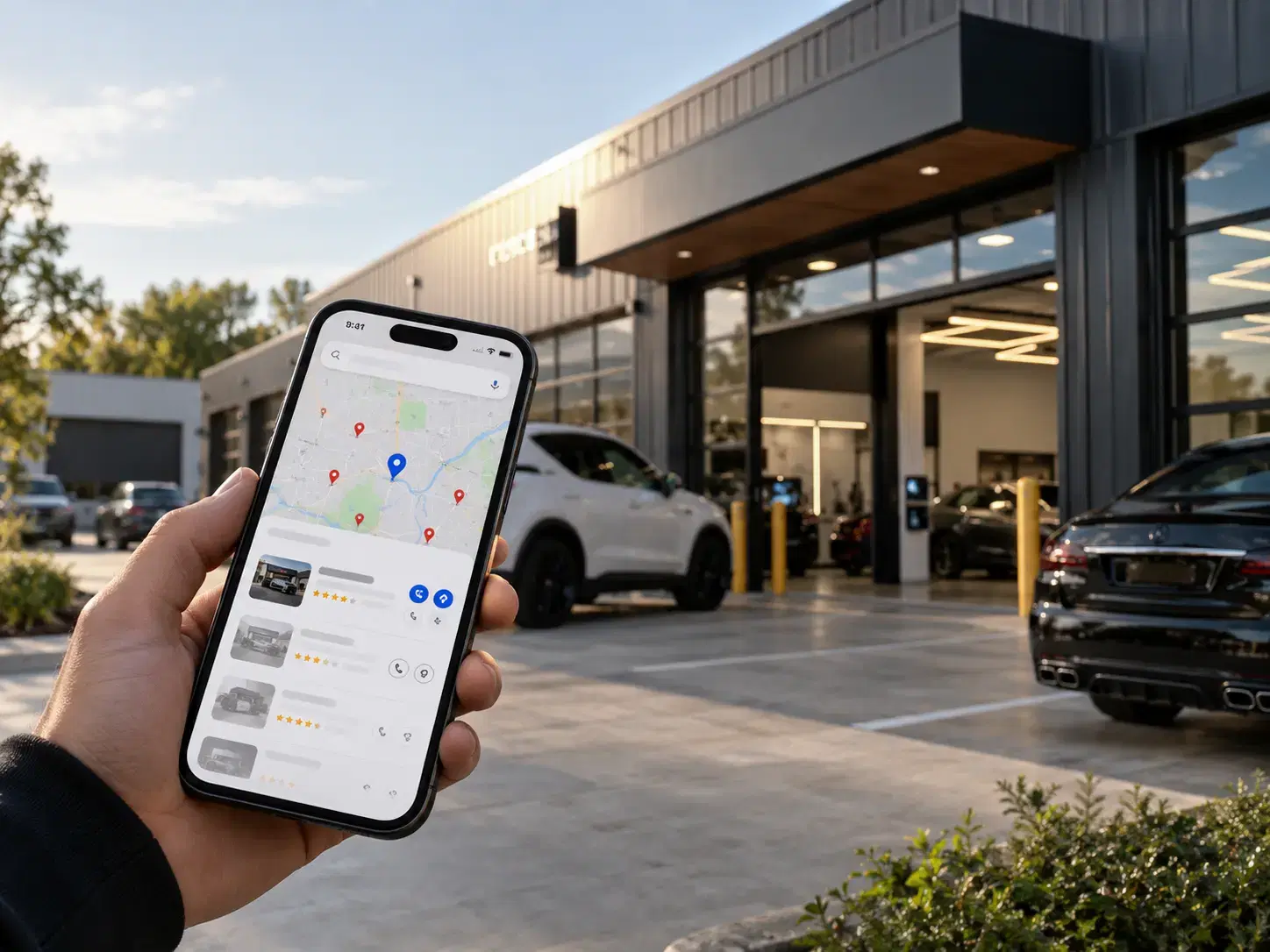
Google Maps advertising and visibility should make the shop look easy to choose.
Customers use Maps to confirm that the business is real, active, nearby, and trusted. That means the listing should support the ad with photos, hours, reviews, service details, phone access, and directions.
Maps is not only about ranking. It is about confidence.
If a customer sees an ad, then checks Maps and finds weak photos or poor reviews, the campaign loses strength.
Use Search Ads for High-Intent Moments
Search advertising works best when the customer has a need.
Someone searching for tire repair, brake inspection, paint protection film, car detailing, or window tint is already thinking about a service. The ad should match that need directly.
Strong search ads avoid generic claims. They mention the service, location, benefit, and next step. The landing experience should continue the same message so the customer does not feel misled.
This keeps the path from search to contact simple.
Use Social Ads for Demand Creation
Social ads are different from search ads.
People may not be actively shopping when they see a post. That means social advertising should create interest, remind customers of a need, or show results they can imagine for their own vehicle.
A detailer can show a dirty interior turning clean. A wrap shop can show a color change. A repair shop can show maintenance tips. A tint shop can show heat and glare benefits.
Social ads work best when they are visual, simple, and believable.
Plan Budget by Intent
Budget should follow customer intent.
High-intent searches may deserve more direct response budget because those customers are closer to booking. Awareness campaigns may deserve smaller testing budgets until the shop knows what message works.
Seasonal demand also matters. AC repair, tint, detailing, tires, batteries, and maintenance can rise at different times of the year.
A smart advertising plan shifts budget based on demand, capacity, and results instead of spending the same way every month.
Track Revenue Signals, Not Just Clicks
Clicks only show interest.
Auto shops should track phone calls, quote requests, booked appointments, completed jobs, repeat visits, and average repair or service value.
This helps the shop understand which campaigns create real business. A campaign with fewer leads may still be better if those leads book higher-value services.
Good advertising decisions come from revenue signals, not surface numbers.
FAQ: Automotive Shop Advertising
What should an auto shop advertise?
Advertise services with demand, capacity, good margins, and a clear reason for customers to act.
Are discounts required?
No. Strong offers can include inspections, consultations, bundles, education, or convenience.
Should social ads and search ads be different?
Yes. Search captures active demand, while social creates awareness and reminds customers of needs.
What should shops measure?
Measure booked jobs, call quality, quote requests, completed revenue, repeat visits, and service value.
Build Campaigns With Clear Roles
Automotive shop advertising works better when each channel has a purpose.
Search captures active buyers. Maps builds confidence. Social creates interest. Email brings customers back. Tracking shows what turns attention into revenue.
Auto Lead Experts helps automotive businesses build advertising campaigns, SEO support, AI search visibility, creative strategy, conversion tracking, and growth systems that help shops spend smarter and win more valuable customers.