
When a driver needs a brake inspection, Google may display nearby garages, a map, reviews, and regular website results. A detailing customer searching the same neighborhood may see a completely different set of businesses. That difference is not random.
Local SEO helps search systems connect a real automotive business with relevant searches in its area. This Auto Lead Expert guide explains the process behind those results, from business information and website signals to the calls that eventually reach your front desk.
Local Search Has Two Connected Surfaces
Google Maps results and ordinary website listings are related, but they are not identical. A Business Profile can appear in local listings, while a service page may appear among organic webpages. A customer can discover your shop through either route.
That means improving only the homepage or only the profile leaves gaps. Both should accurately describe the same operation, yet each serves a different purpose. The profile helps people identify and contact a location quickly. The website explains services in enough detail to support a decision.
Relevance Starts With Business Identity
Google says local results mainly consider relevance, distance, and prominence. Relevance begins with understanding what a business actually does.
A transmission specialist should use an appropriate business category and clearly describe transmission services. A wrap studio should not present itself as a repair garage simply to target popular searches. Categories, service information, and descriptions must reflect reality.
Keep your official business name unchanged rather than adding cities or keywords. Google restricts unnecessary additions to Business Profile names. Accuracy protects the listing and prevents customers from arriving for services you never offered.
Distance Is a Constraint, Not a Setting
Searchers in different neighborhoods can receive different map results because their locations differ. You cannot optimize away the distance between your workshop and a customer.
A mobile detailing business has another consideration: service-area settings should reflect where technicians genuinely travel. Listing extra towns does not create additional physical branches or promise visibility in each one.
Rather than chasing an entire metropolitan area, identify neighborhoods where customers can reasonably reach you or where your team can reliably perform work.
Prominence Builds Through Real Activity
Google describes prominence as how well-known a business is. Reviews, references from other websites, and broader recognition can contribute.
Encourage honest reviews after completed jobs and respond professionally. Keep information consistent with reputable directories, local organizations, and supplier profiles. Original project photos also give visitors evidence of your work, even though photographs alone cannot guarantee better rankings.
Avoid buying reviews, manufacturing locations, or purchasing links solely to manipulate rankings. A genuine reputation is more sustainable than artificial signals.
The Website Explains Each Service
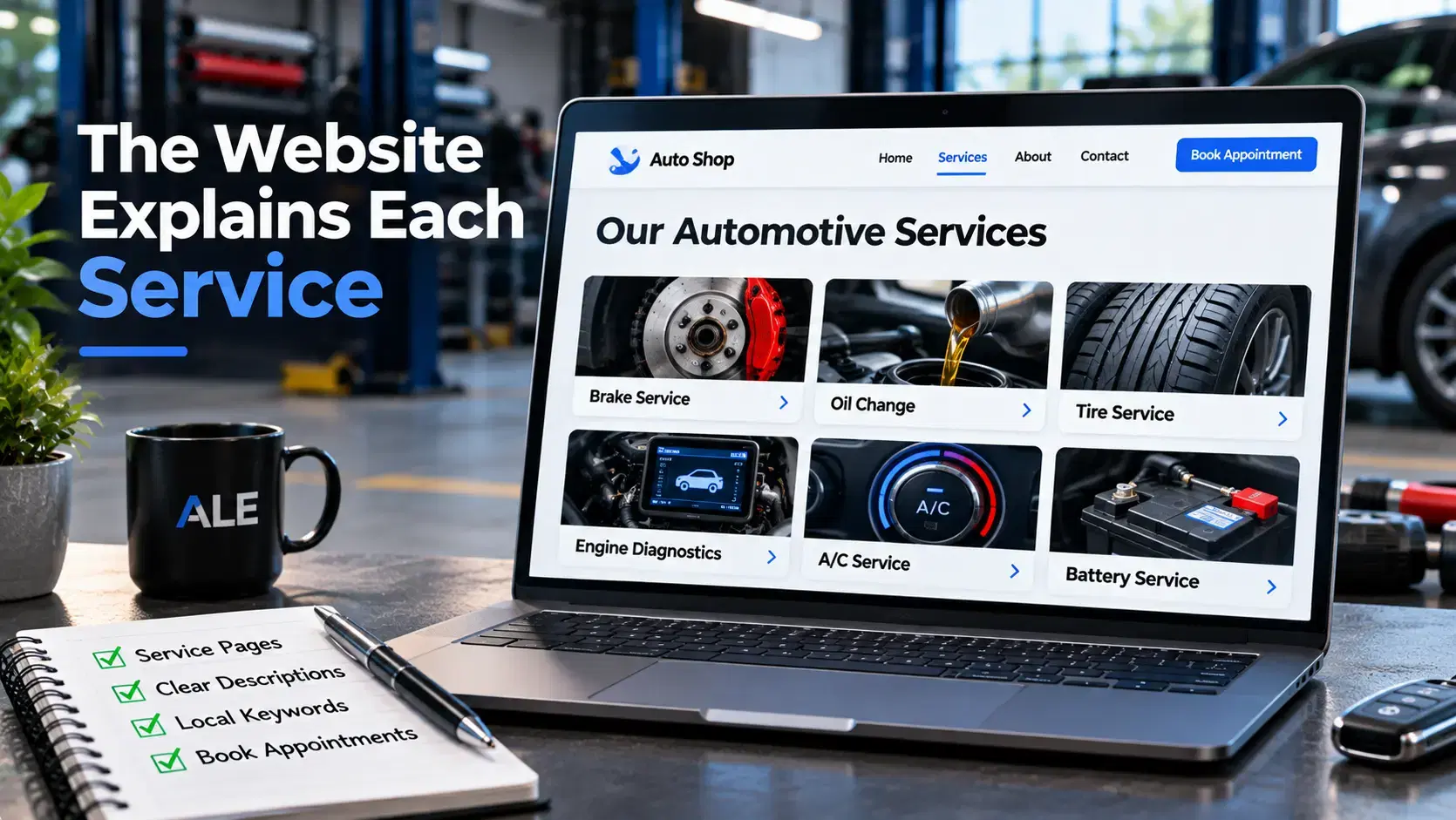
Imagine a customer searching for engine diagnostics. A page that merely says “complete automotive solutions” leaves important questions unanswered.
Describe the symptoms customers bring in, the inspection process, relevant vehicle types, and how to schedule. For tint or PPF, explain coverage options and limitations. Connect those pages to your location and contact information through clear navigation.
Search engines need crawlable pages, but customers need understandable answers. Use descriptive headings and useful internal links rather than inserting the city name into every paragraph.
Business Details Must Agree Everywhere
Check your website, Business Profile, appointment forms, and major directory listings for conflicting addresses, hours, or phone numbers. Correct old details after relocating or changing business hours.
Storefront businesses should display their genuine customer-facing location. Mobile operators have different profile rules, including when an address must be hidden. Do not create fictional locations to reach more searchers.
LocalBusiness structured data can help describe legitimate website information, but it does not guarantee special results or rankings.
Measure the Journey Beyond Visibility
A ranking report is useful only when connected to business outcomes. Review which service pages attract organic visits, which calls came from search, and whether appointments were confirmed.
Separate organic results from paid advertisements. Classify inquiries by service, location, and booking status so irrelevant calls do not inflate your reported success.
For example, a PPF inquiry from a nearby driver seeking full-front coverage is more meaningful than ten unrelated form submissions. Reporting should show that distinction clearly to owners.
If customers reach your profile but cannot find available appointment times, fix the scheduling experience. If requests repeatedly concern services you do not provide, improve your descriptions before publishing more pages.
Everything About Local SEO for Automotive Shops
Does a verified Business Profile guarantee ranking?
No. Verification helps establish management rights, but relevance, distance, prominence, and competition influence visibility.
Can one shop rank across an entire city?
Possibly for some searches, but proximity changes results. No business can guarantee uniform map placement everywhere.
Does paying for ads improve local SEO?
No. Google advertising buys separate visibility and does not purchase better organic rankings.
Should every nearby suburb have its own page?
Only when the page provides meaningful, accurate information beyond a duplicated location name.
How should an owner judge progress?
Track qualified organic calls, genuine appointment requests, completed work, and the customer experience after contact.
Make Local Visibility Useful
Local SEO works by helping Google recognize what your shop offers, where it operates, and why people may trust it. Strong profiles and websites work together, but neither replaces responsive staff or reliable service.
Auto Lead Experts helps automotive businesses strengthen those foundations and connect local discovery with measurable, qualified customer inquiries.